909 N Charles: What’s up with the history of Bar Dali?
If you've walked through Baltimore's Mt. Vernon neighborhood, you've probably passed this building without giving it much thought.
Like so many old commercial buildings in the city, its façade doesn't hint at the number of lives it's lived over the past 130 years. But newspaper archives, city directories, census records, and classified ads tell a surprisingly rich story.
1894: Built as apartments
The building first appears in 1894, when it was owned by Canadian carpenter and builder James S. Forbes. Like much of Charles Street at the time, it functioned as an apartment building rather than a commercial storefront.
That residential use would continue for decades, even as businesses gradually occupied the street level.

The Baltimore Sun - 09/28/1894
1902: A society widow moves in
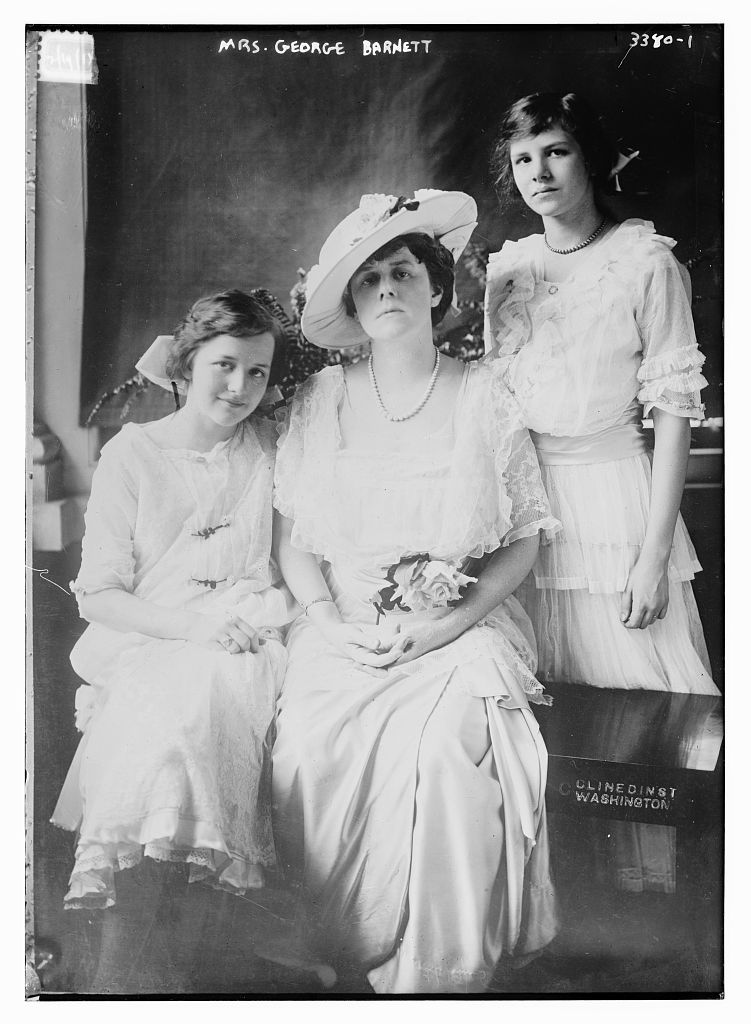
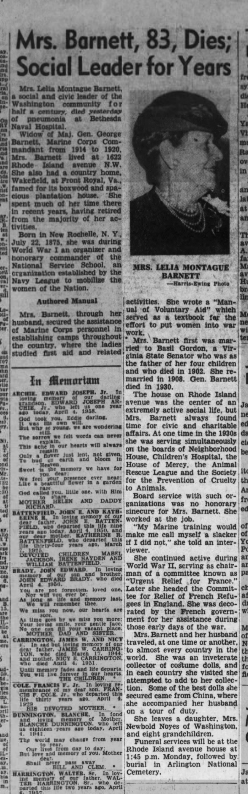
One of the more interesting residents was Mrs. Lelia Sinclair Montague Gordon, who appears in newspaper classifieds while searching for a chambermaid.
Lelia had recently been widowed after the death of Maryland State Senator Basil Gordon, with whom she had four children. Several years later, she remarried General Barnett, who died in 1930.

1915–1935: From apartments to fashion
By the mid-1910s, the building was beginning to shift toward commercial use.
Classified advertisements sought "skirt hands" and "skirt drapers," suggesting that a dressmaking or tailoring business occupied the building. Newspaper references over the following two decades continue mentioning dress draping, fitting, and tailoring.
Meanwhile, people were still renting apartments upstairs.


1919–1940s: Realtors move in
In 1919, the Federal Farm & Realty Company established offices in the building.
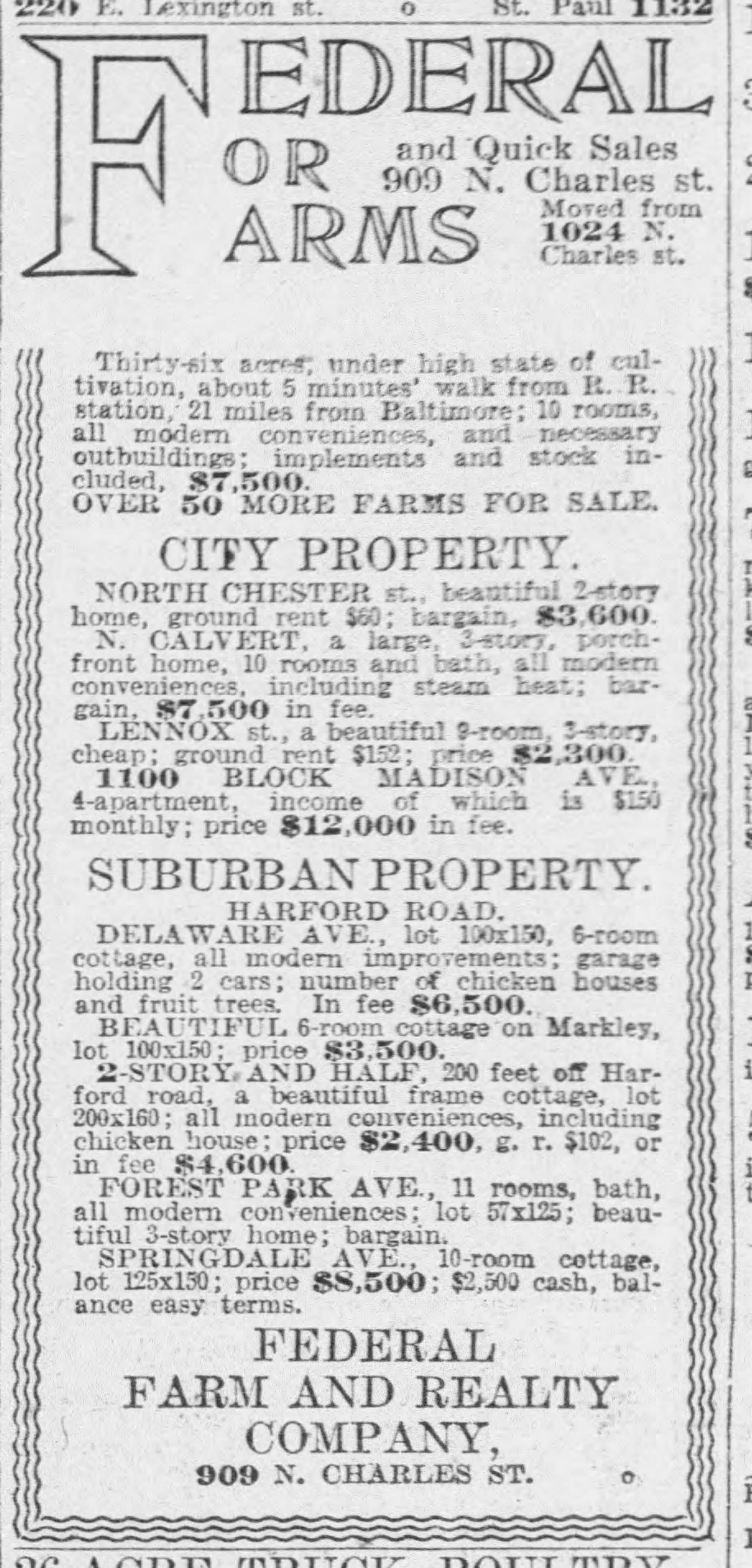
The Baltimore_Sun - 04/20/1919
Just a few years later, advertisements promoted the entire building for rent, boasting of a beautiful show window, a sign that the property was increasingly viewed as prime commercial real estate.
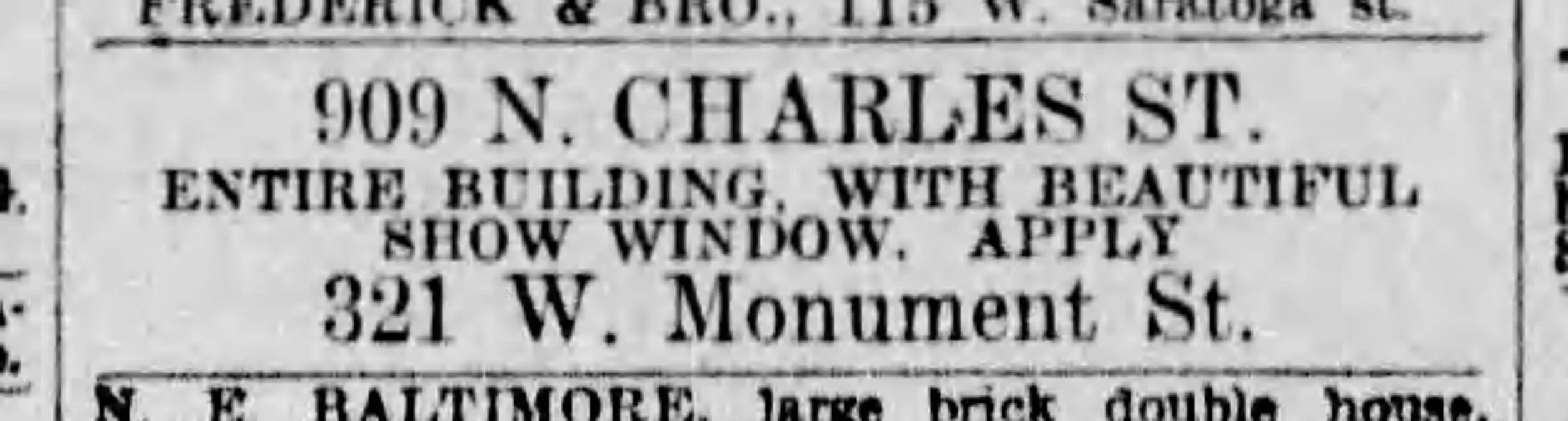
The Evening Sun - 04/21/1921
Throughout the 1940s, the address continued attracting real estate firms, including Edward F. Lyman, Inc., whose business stretched along the New York-to-Baltimore corridor, and later Greenbank Realty Company.
Baltimore's tailoring years
The building also spent much of the mid-century serving Baltimore's garment trade.
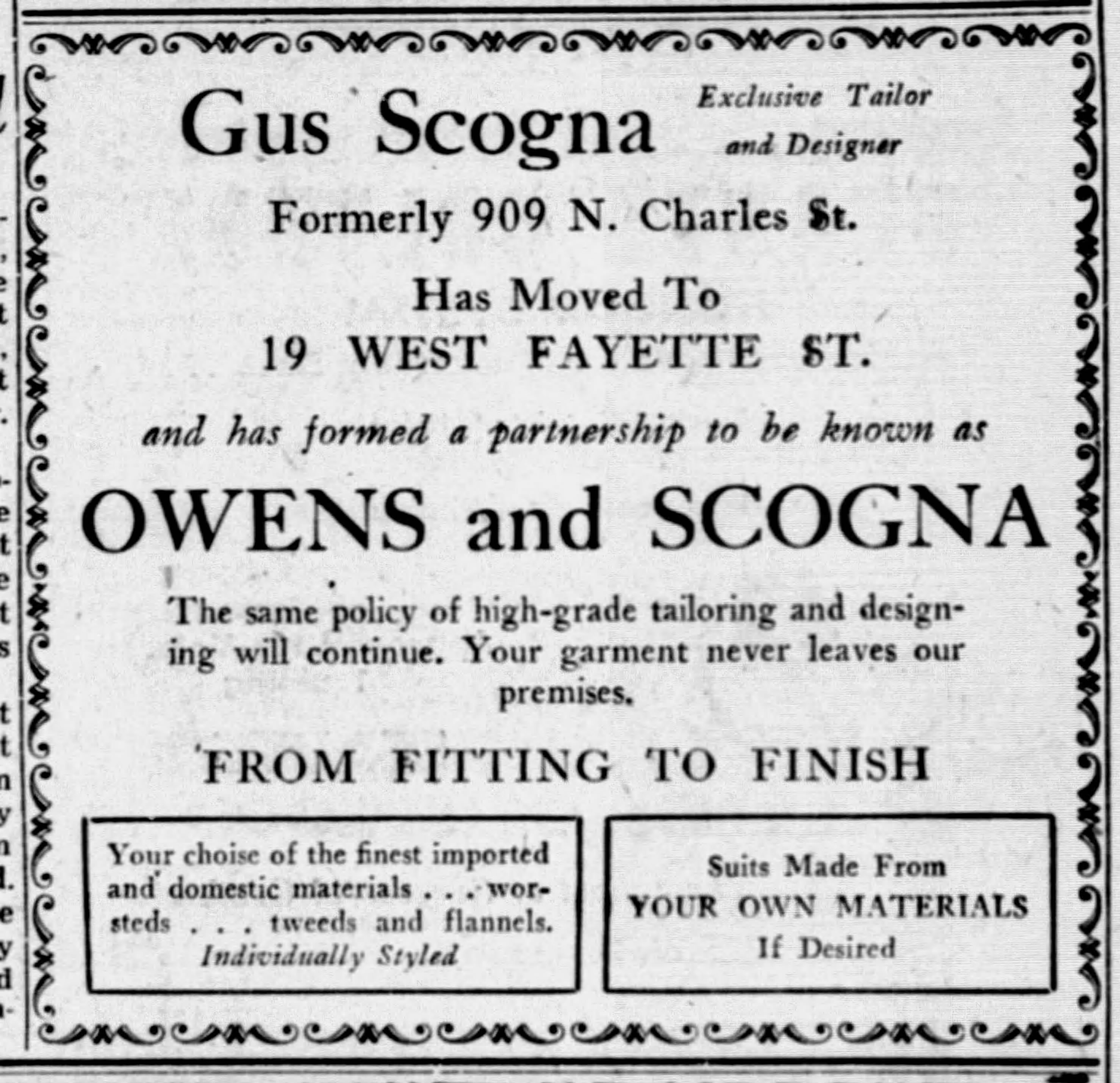
Italian immigrant Guistino "Gus" Scogna, who had arrived in Baltimore in 1908, operated his tailoring business here before relocating to Fayette Street in 1946.
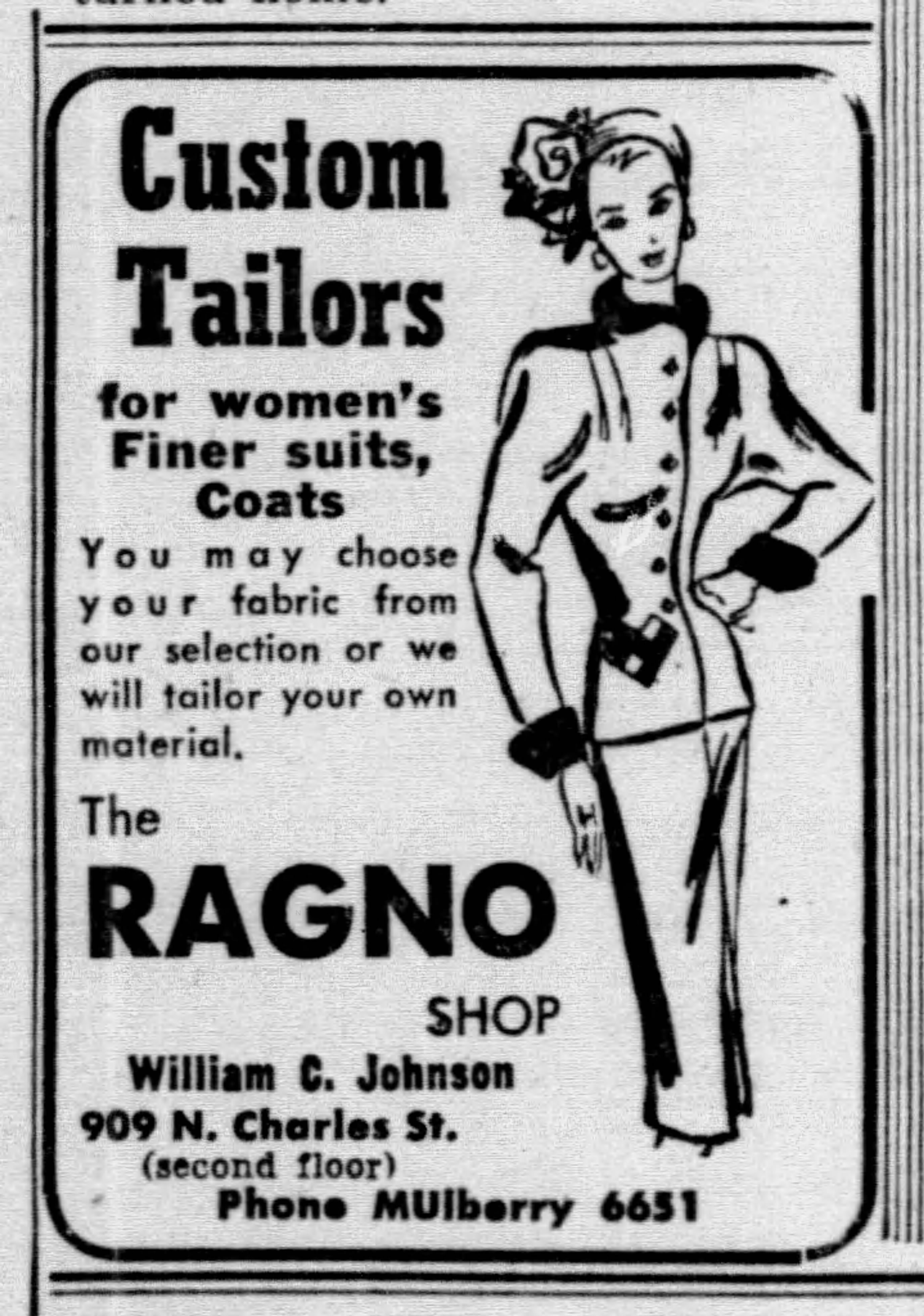
That same year, The Ragno Shop opened under tailor William C. Johnson. The business was short-lived; by 1949, newspaper notices show its assets being auctioned, apparently following legal troubles.
1950-1966: The building that photographed generations of Marylanders
Perhaps the building's most significant chapter began around 1950.
For the next sixteen years, it housed Segall-Majestic Photo Studio, founded by German immigrant Louis Segall and later operated alongside his son Karl.
Louis had run a photography studio in Hamburg before emigrating to Baltimore and opening a new studio in 1938.
Then, in the late 1950s, Karl met a high school yearbook representative who convinced him to pivot the business toward school photography.
Over the following decades, Segall-Majestic photographed what one newspaper described as nearly every Marylander's high school portrait for two generations.
The family business continued expanding under Karl's son, John Segall, who explored everything from pet photography to glamour portraits before the company was ultimately sold to Lifetouch National School Studios in 1995.
There's a decent chance that if you grew up in Maryland before the mid-1990s, your yearbook photo traces back to a business that once occupied this building.
1960s: Travel and basketball
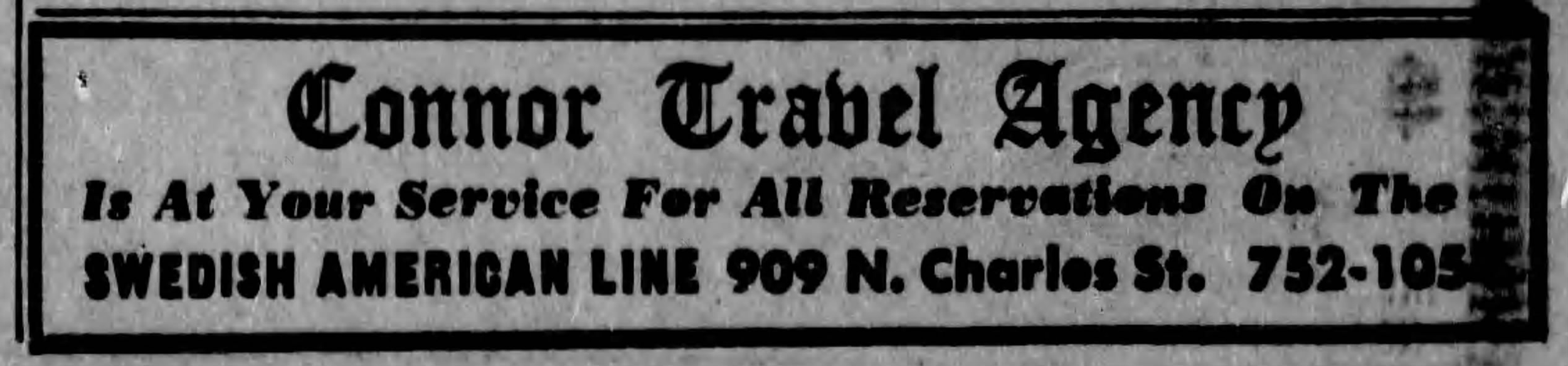
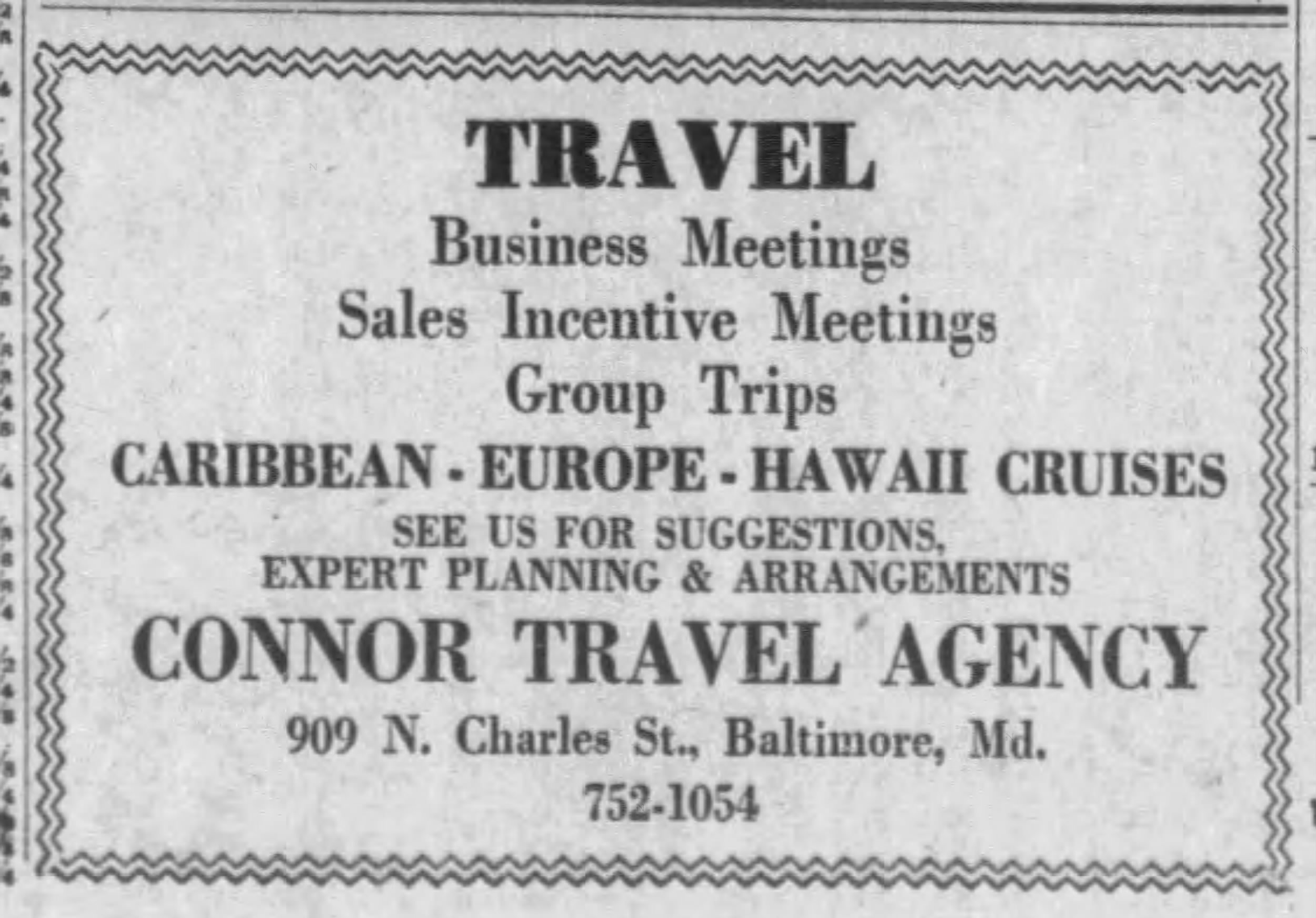
By the late 1960s, the building reinvented itself yet again. In 1968, it housed Connor Travel Agency. The Baltimore Bullets also called the building home.
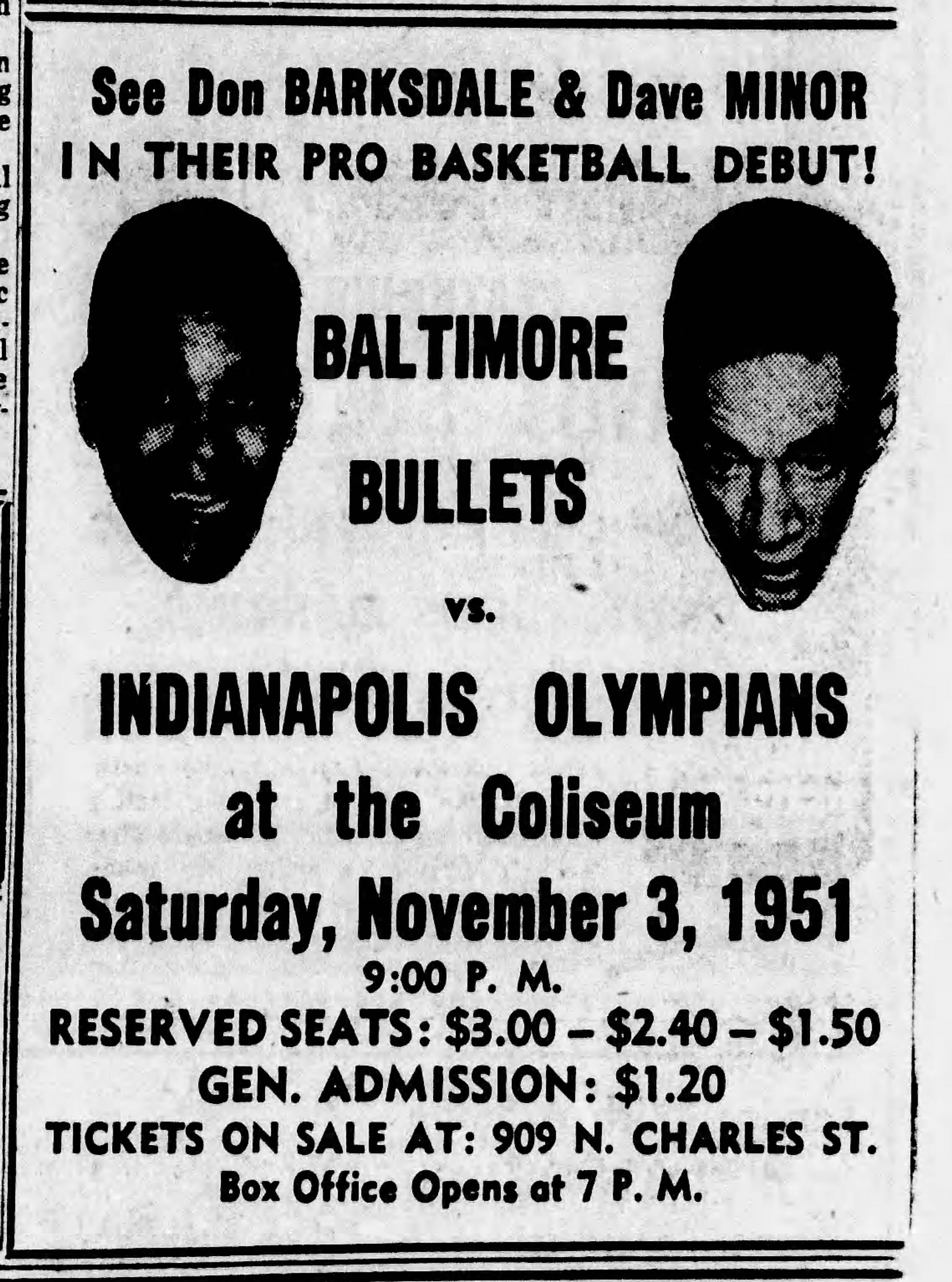

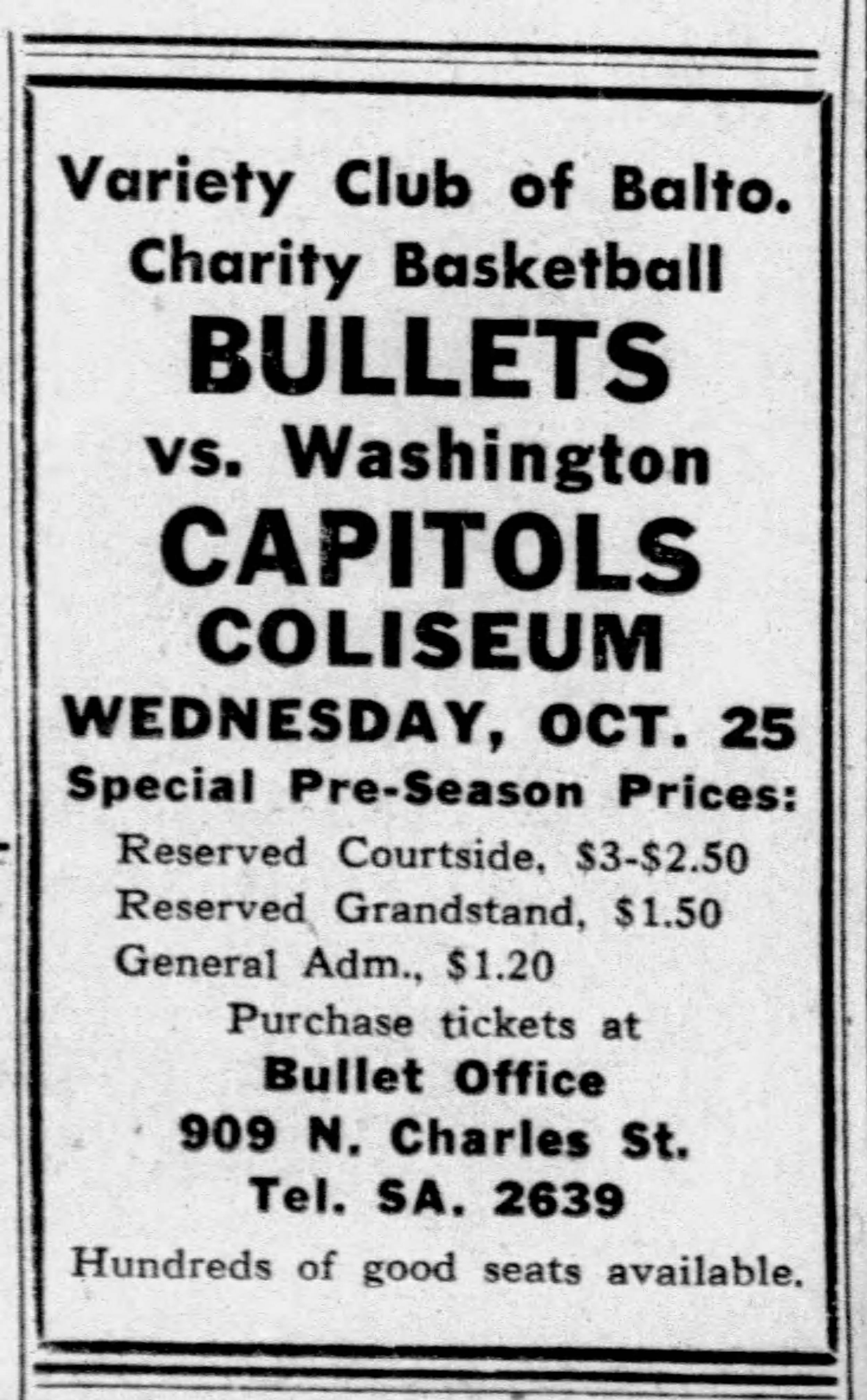
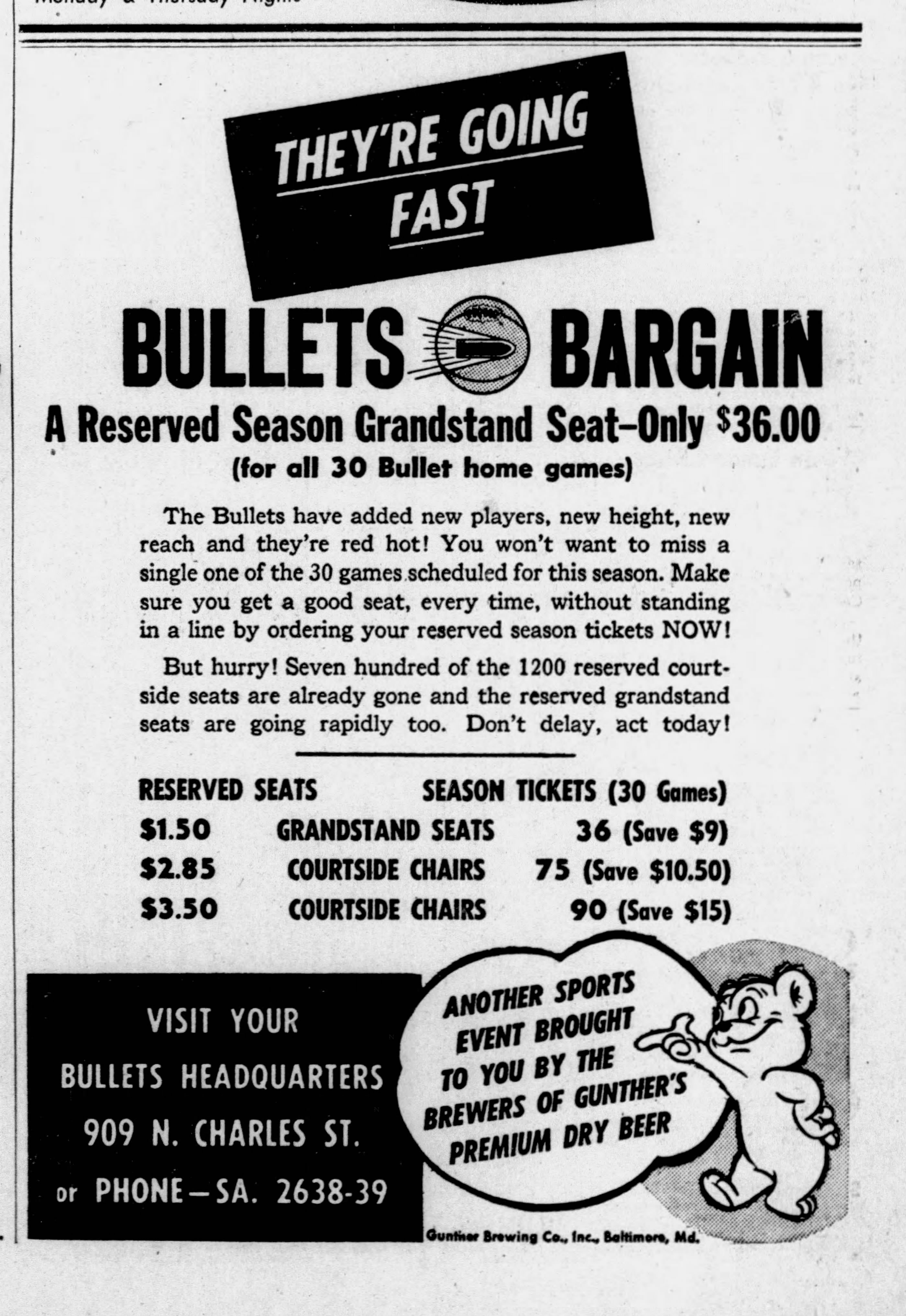
Then came perhaps its most public-facing chapter.
The restaurant years
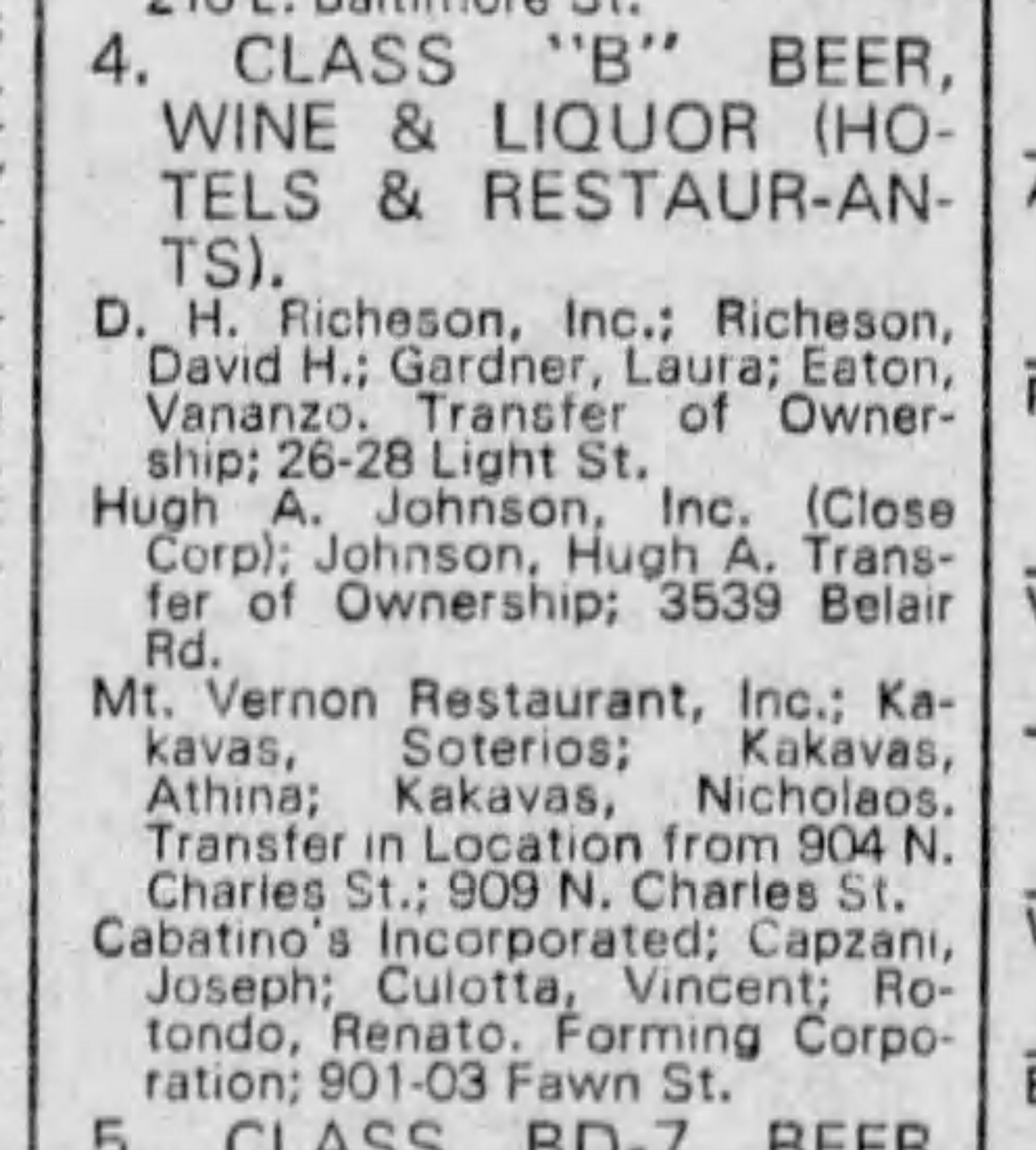
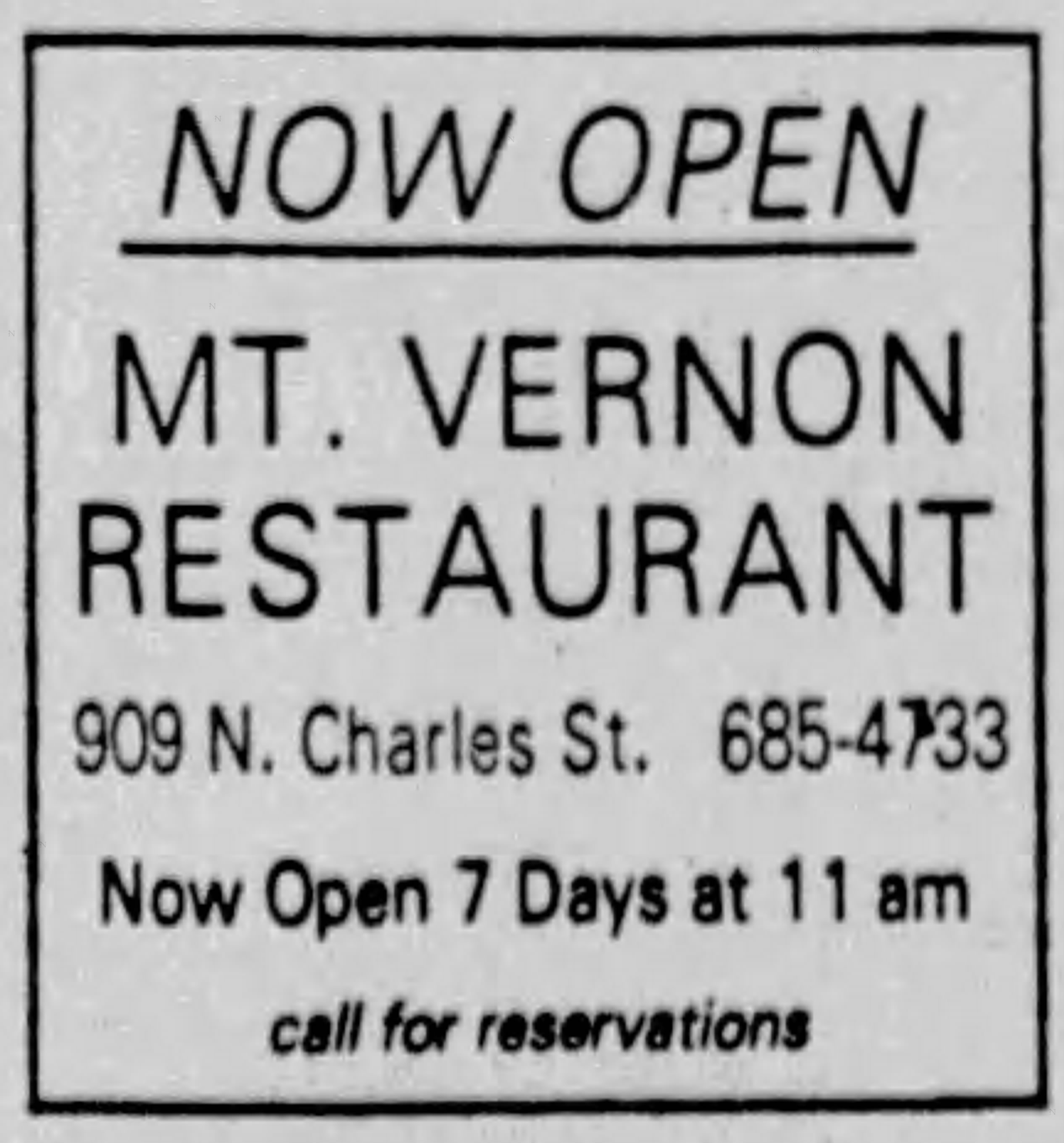
Beginning in 1979, the address became a restaurant - and stayed one, under a succession of different names, for years.
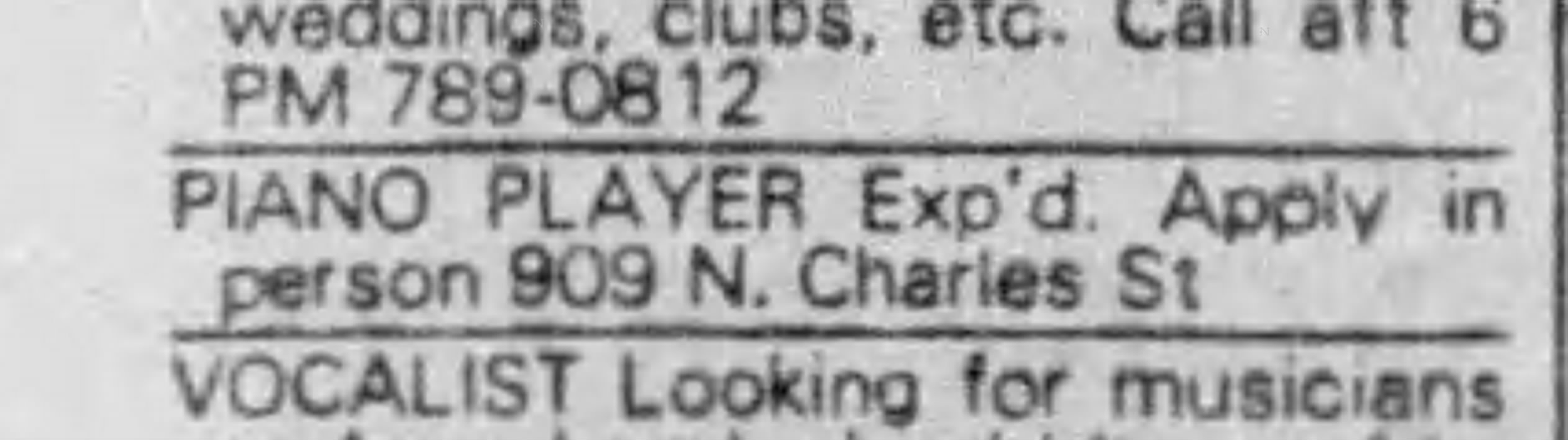
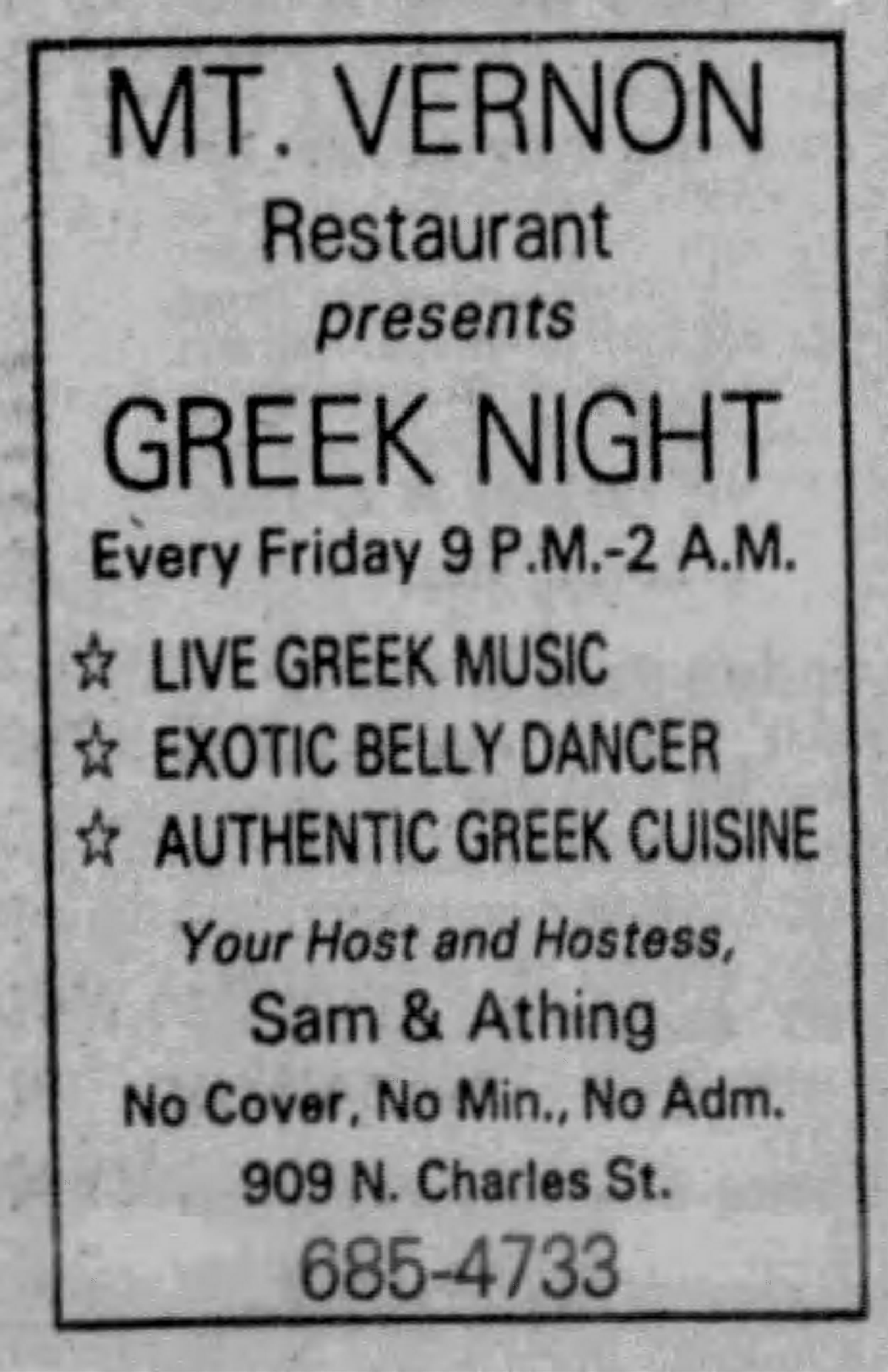
First came the delightfully literal Mt. Vernon Restaurant, complete with a piano player and recurring Greek Night events.
Then came:
Richard's ("Modern Victorian") in 1982
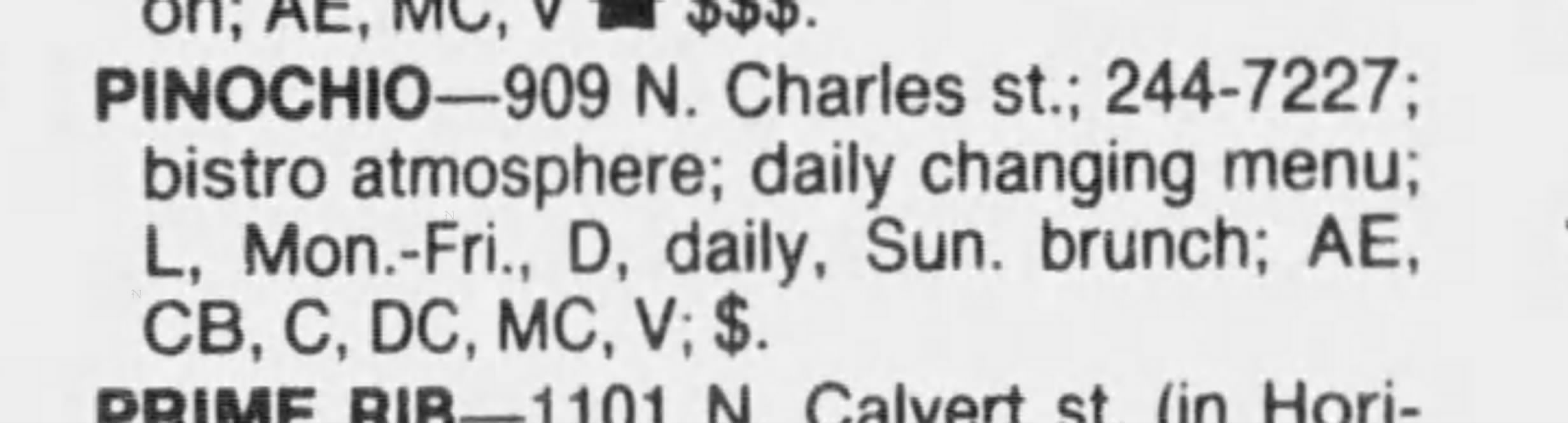
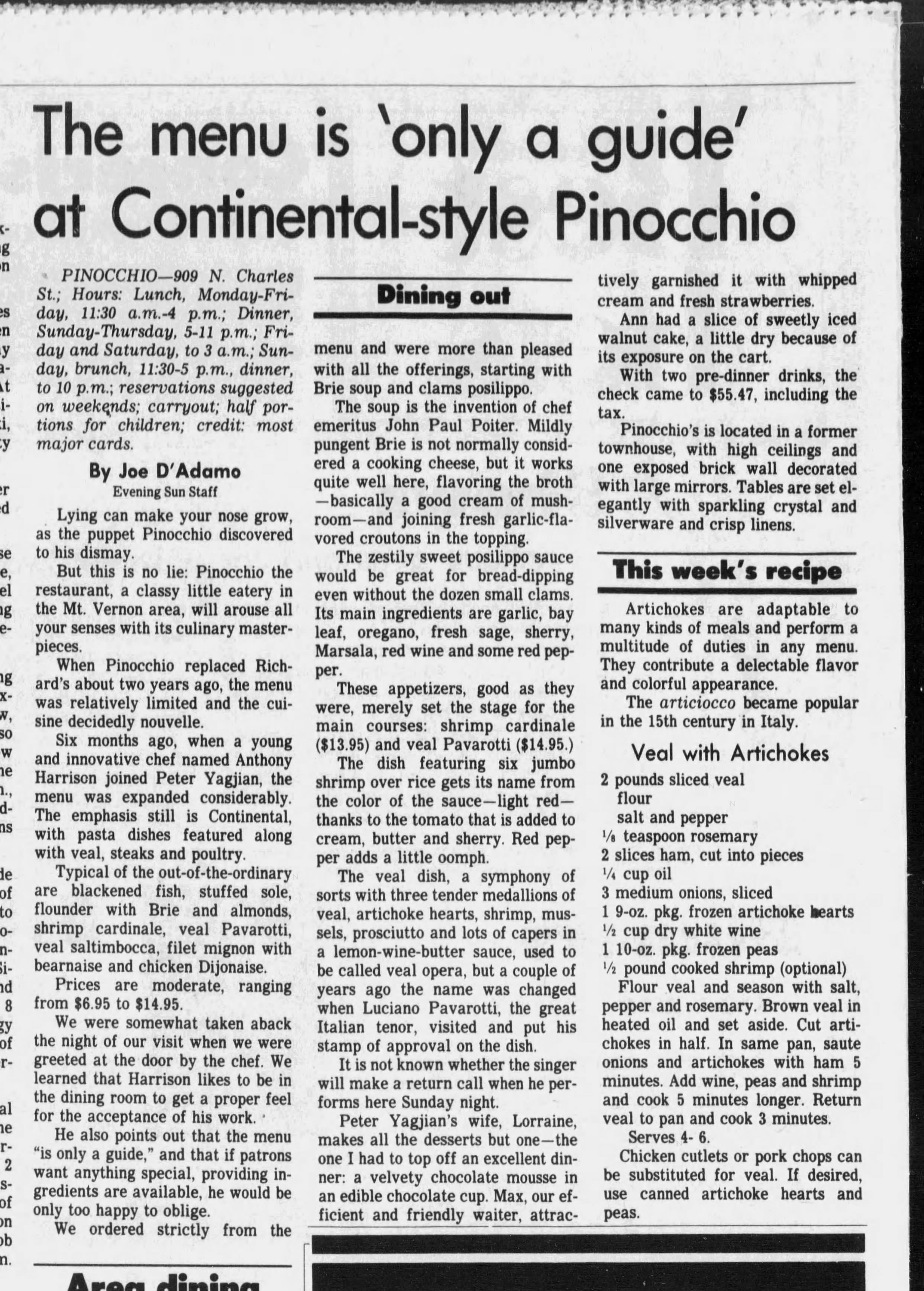
Pinocchio's in 1985
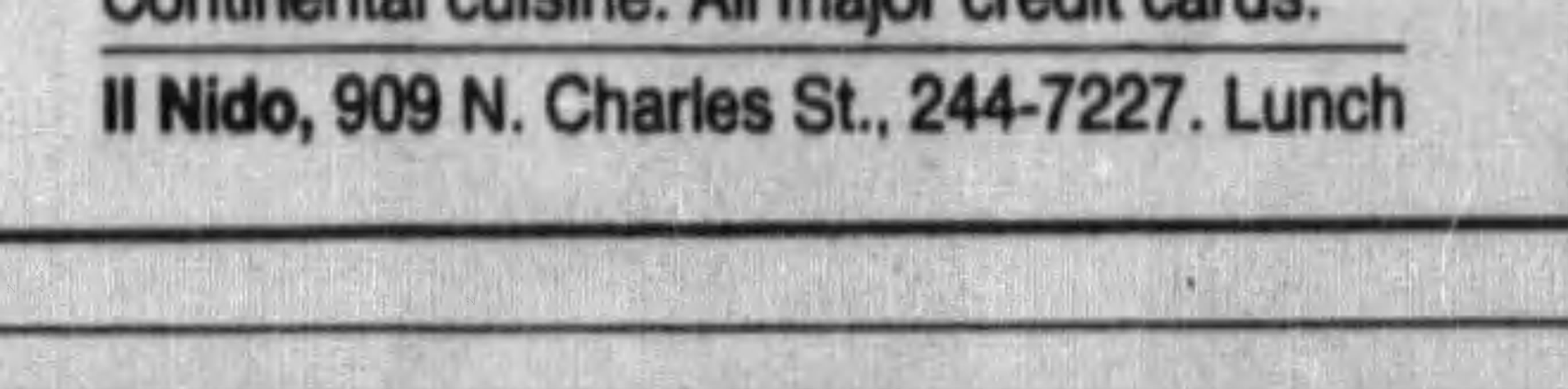
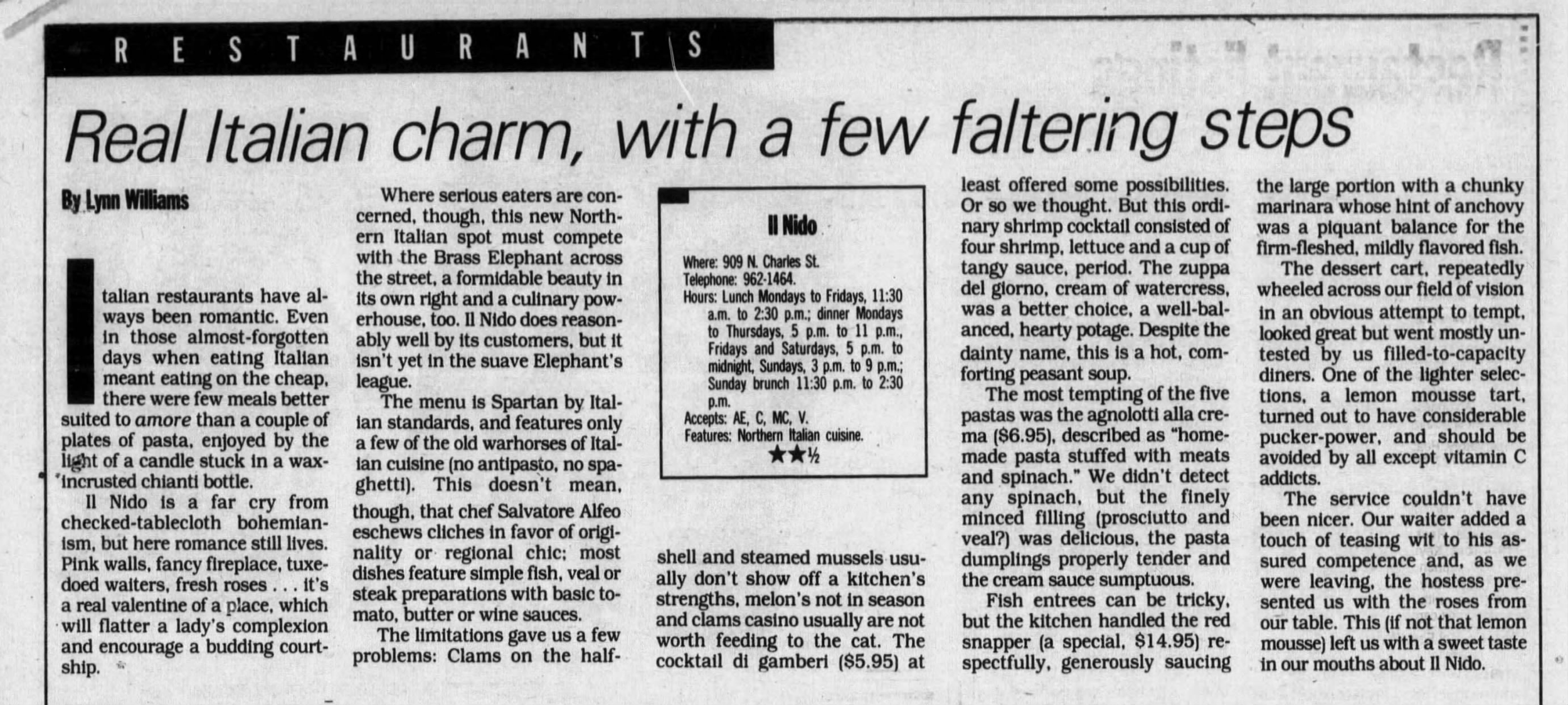
Il Nido, serving Italian cuisine beginning in 1987
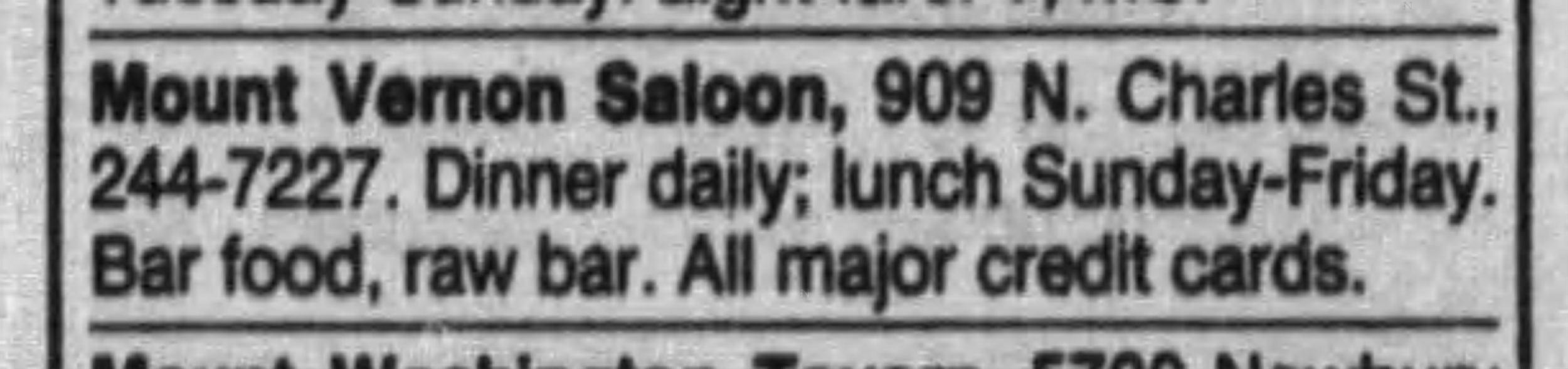
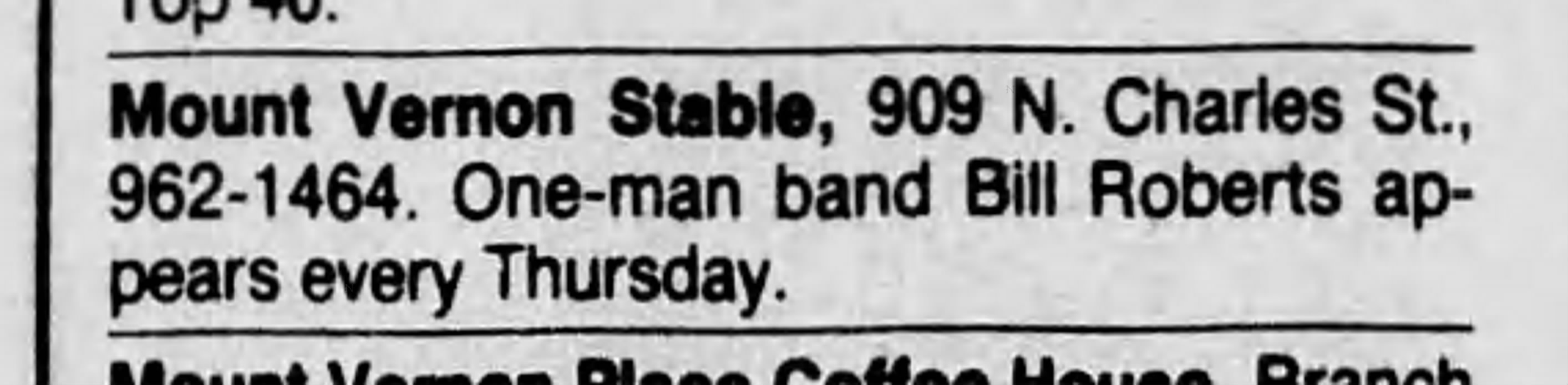
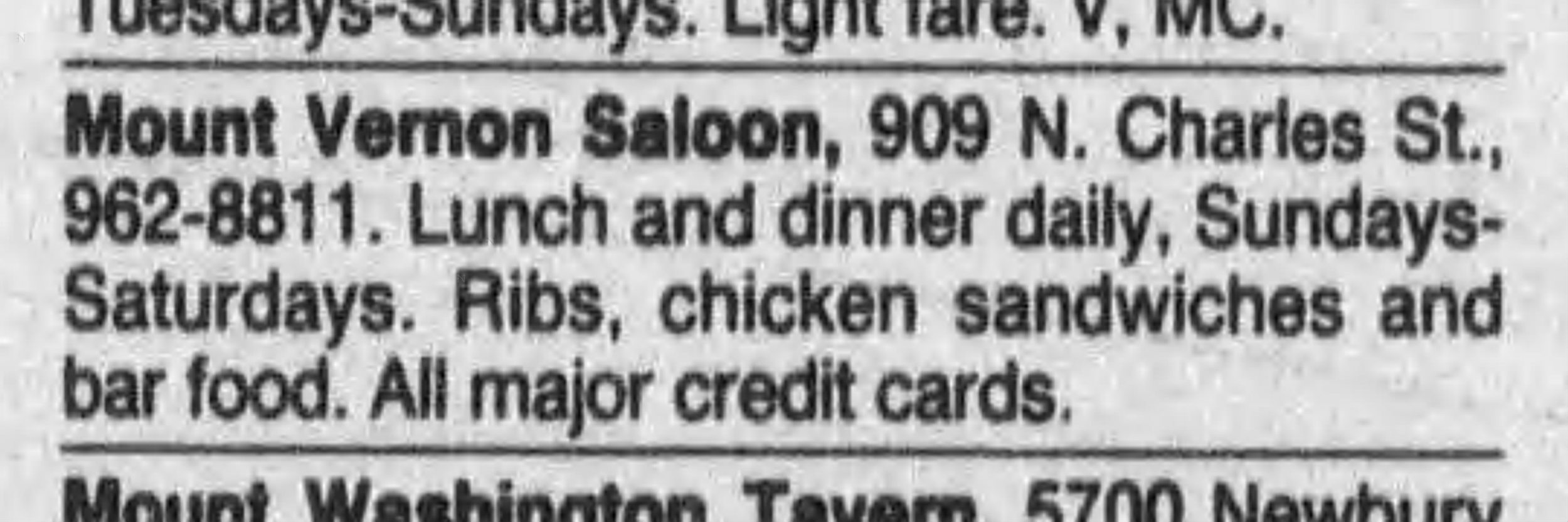
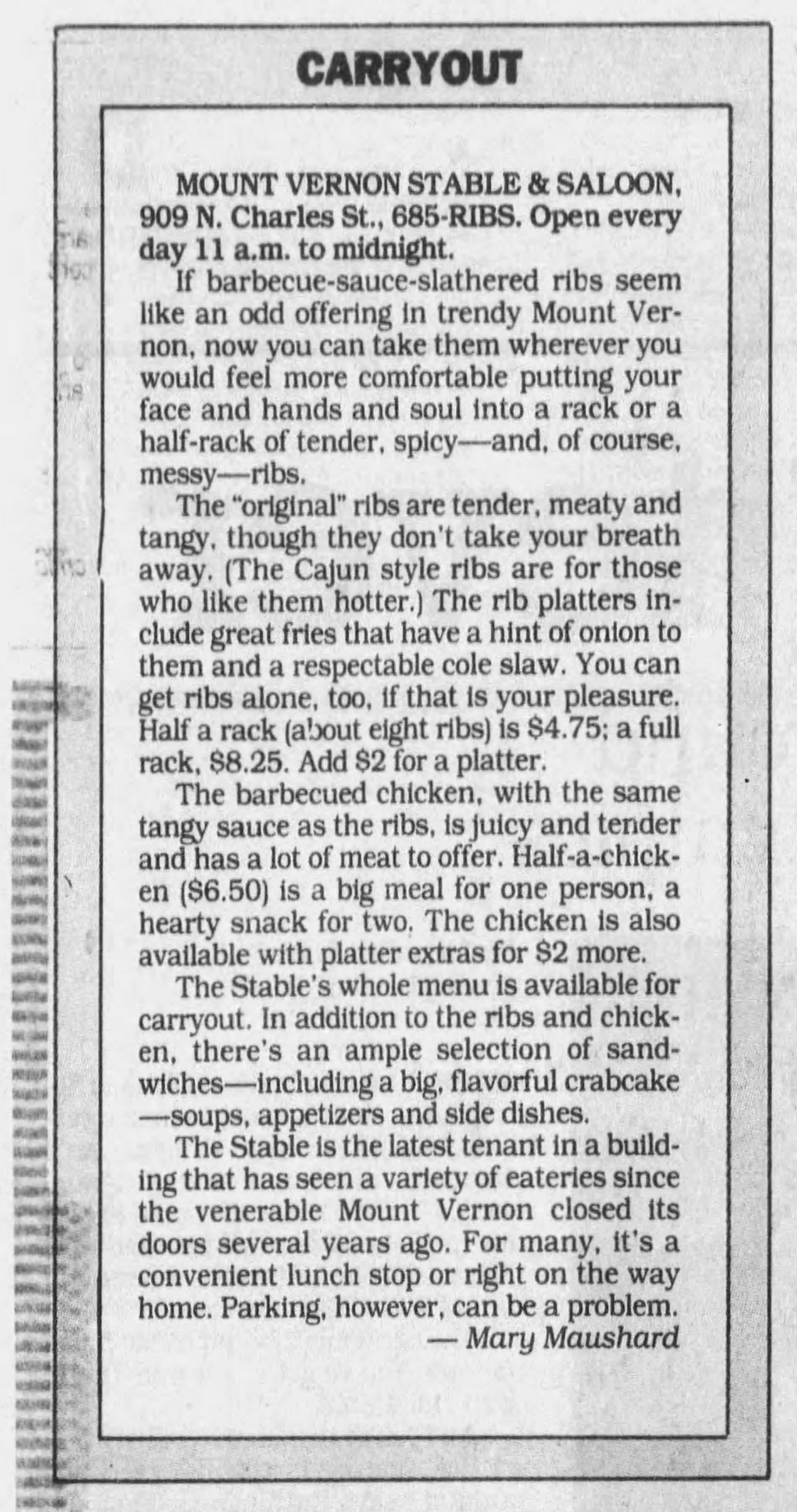
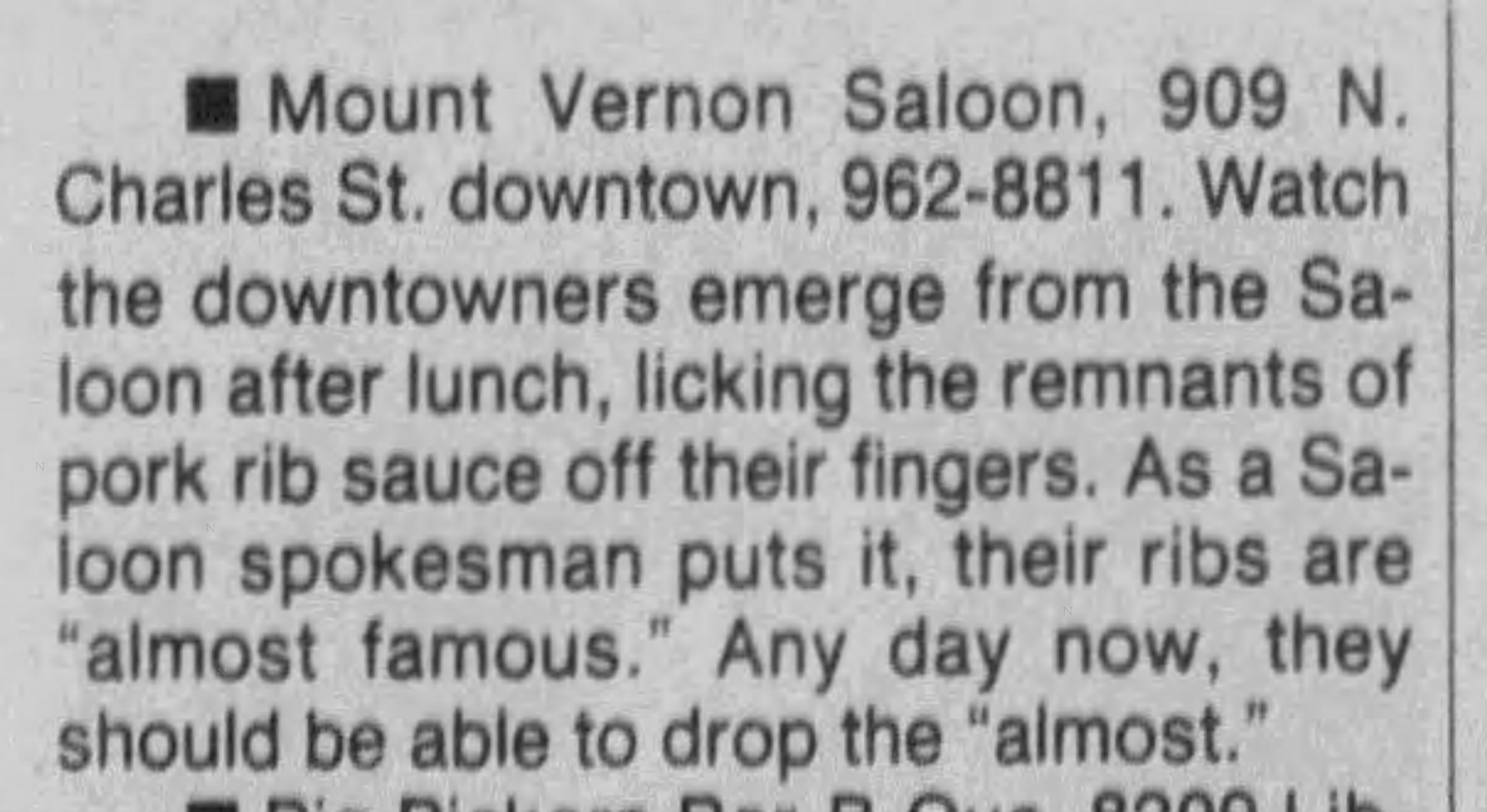
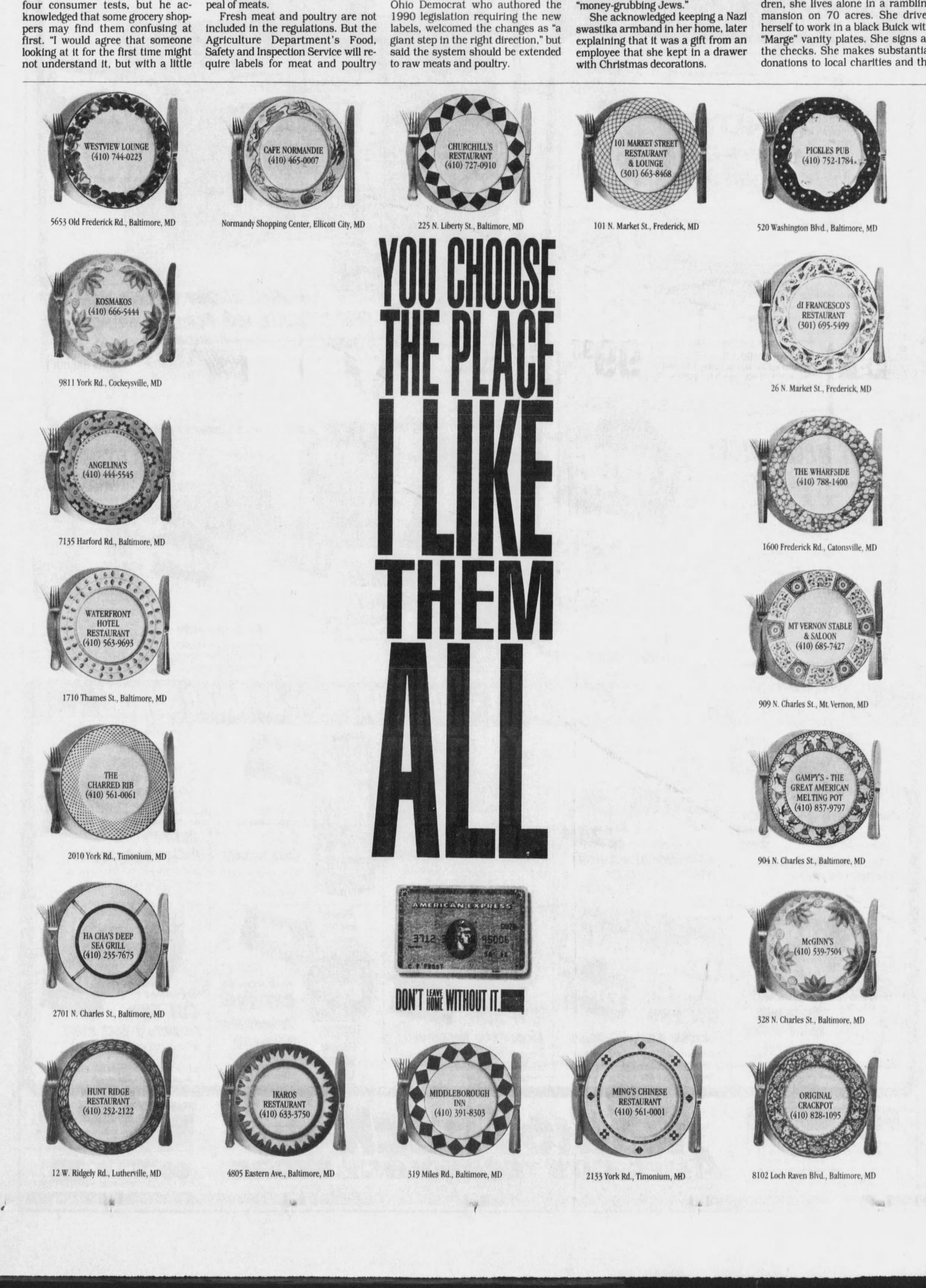
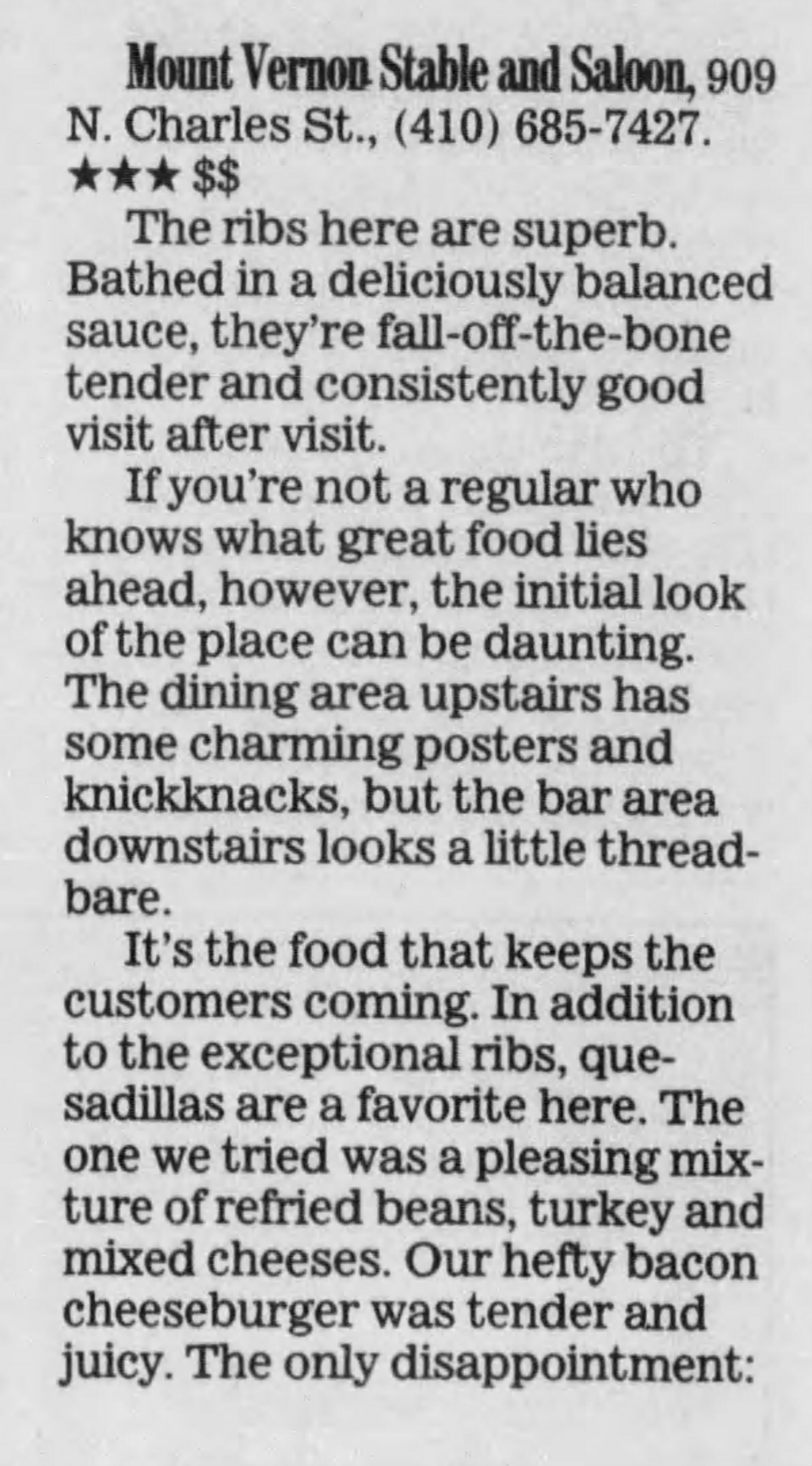
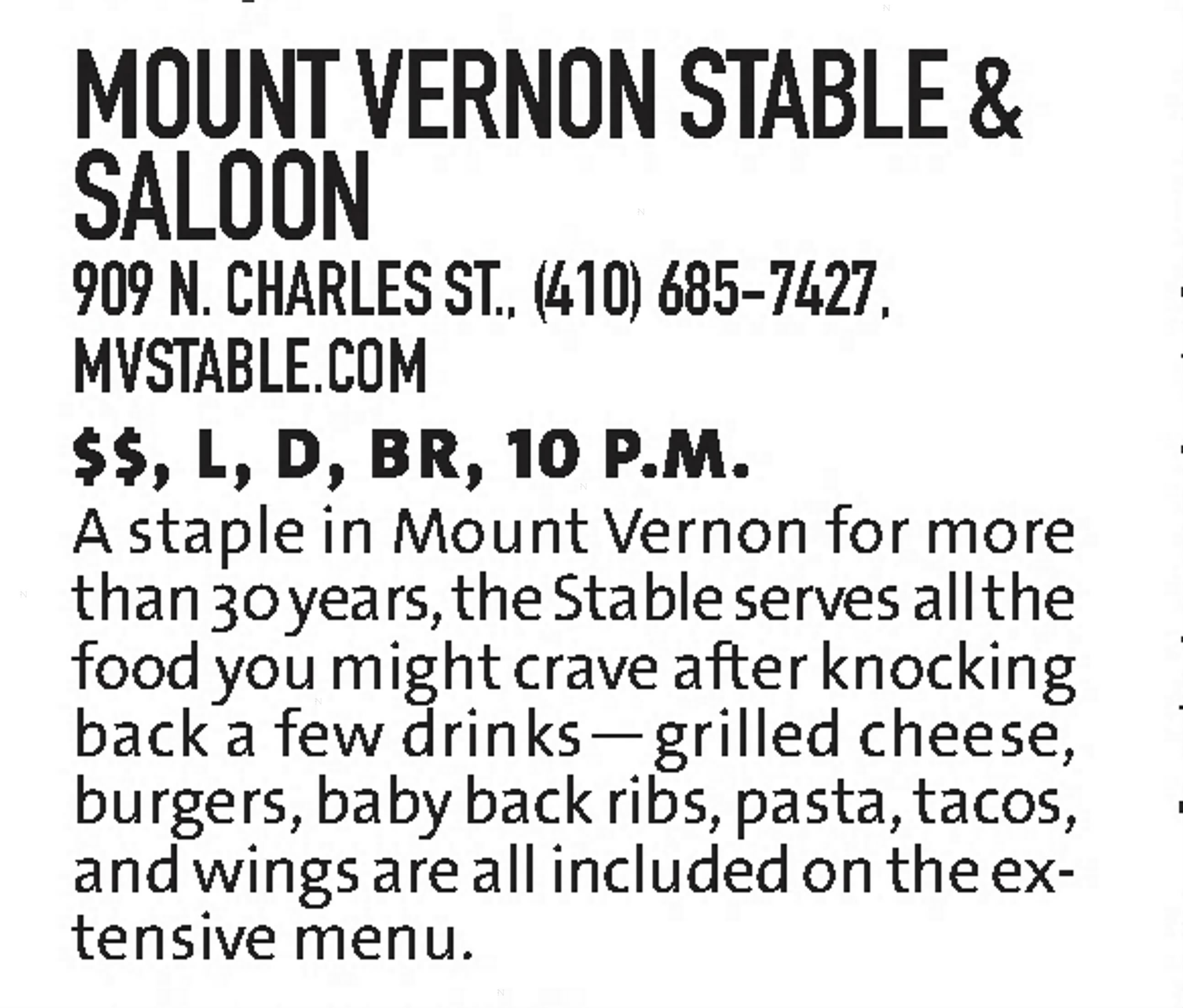
Mt. Vernon Saloon
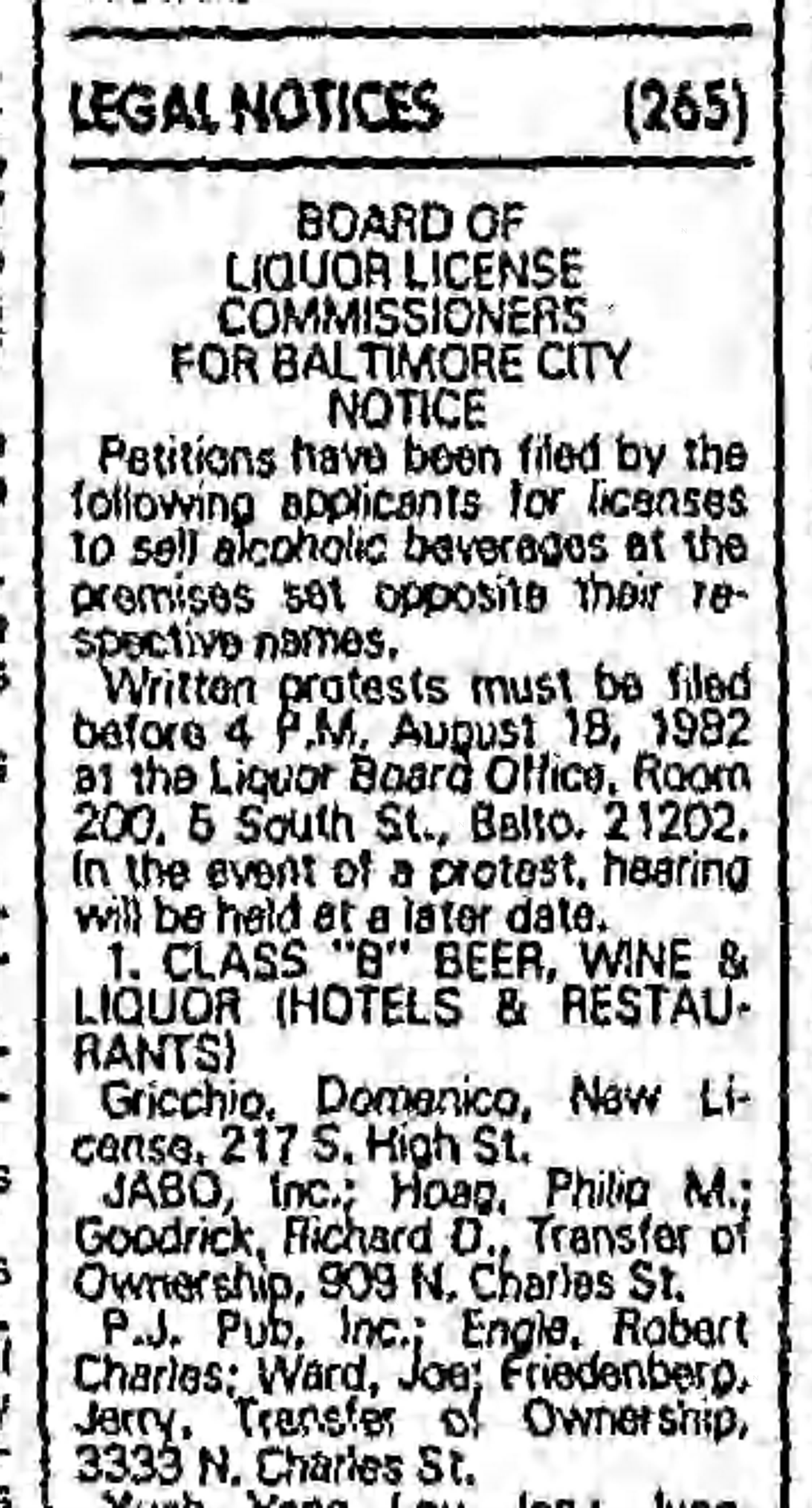
Each owner left behind a trail of advertisements, reviews, liquor license transfers, and society columns, making this one of the building's easiest eras to reconstruct.
Swann House
In 2024, the upper floors reopened as Swann House, an event venue.
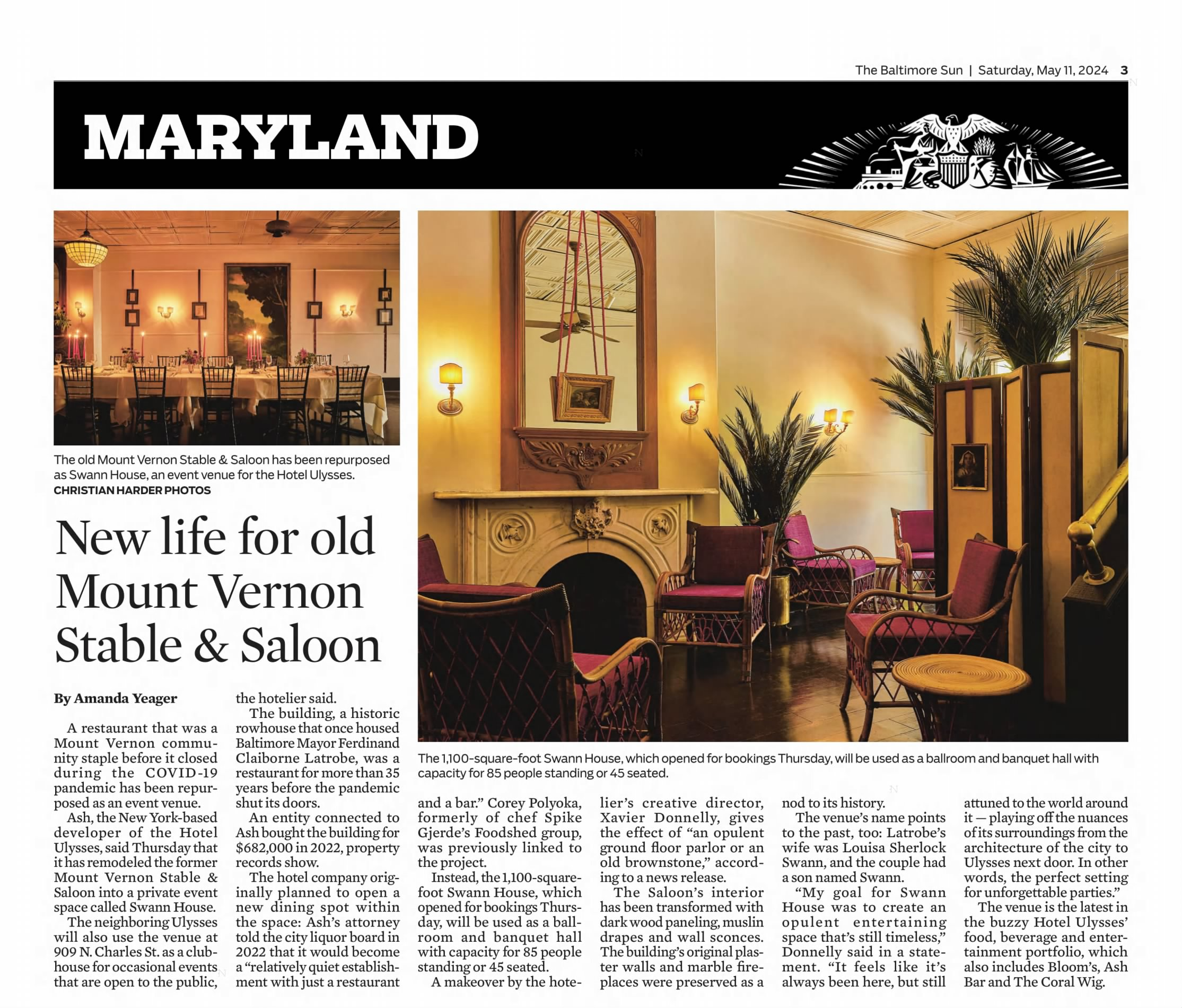
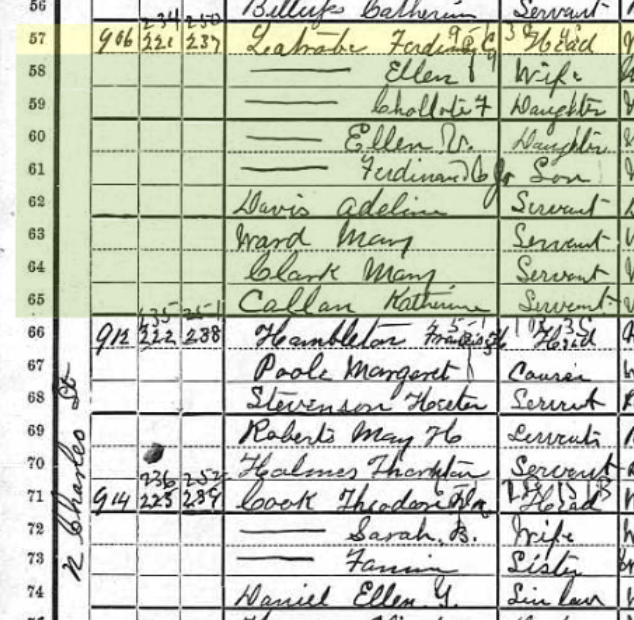
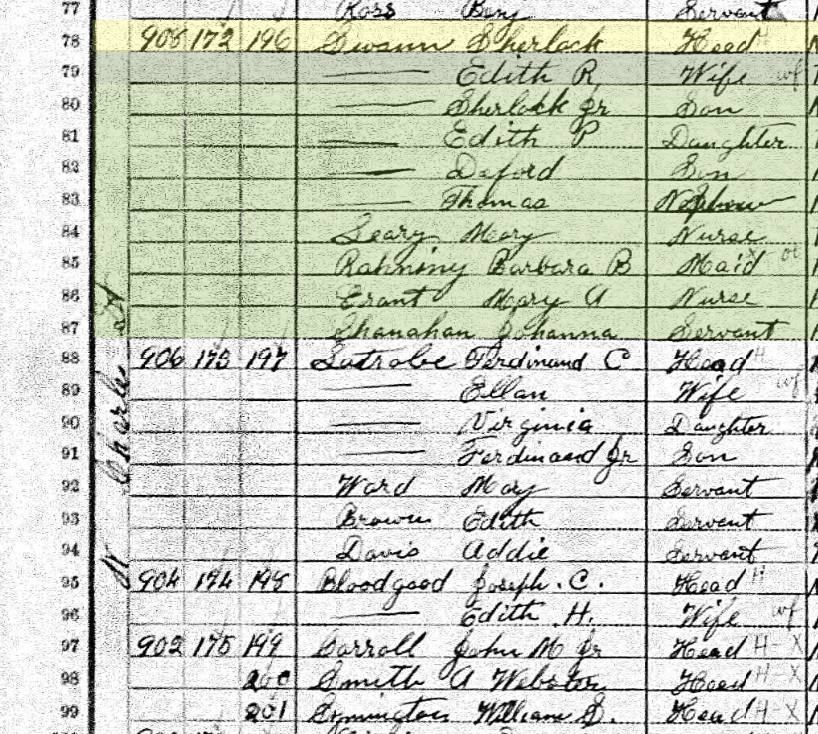
According to some publications, the venue takes its name from Baltimore Mayor Ferdinand Claiborne Latrobe, claiming he once lived in the building with his wife, Louisa Sherlock Swann, and that original plaster walls and marble fireplaces were preserved in honor of that history.
Both the 1900 and 1910 federal censuses place Latrobe at 906–908 North Charles Street, just down the street from this building, in what is now Hotel Ulysses, formerly the Latrobe Apartments, originally the Latrobe House.
The next chapter
As of 2026, the space is home to Bar Dali, the latest business to occupy a building that has continually reinvented itself for more than a century.
Most people walk past old buildings assuming they've always been what they are today. But scratch beneath the surface - and read enough classified ads - and an ordinary storefront becomes a timeline of Baltimore itself.